Live in: ON | Soon: BC, AB 🇨🇦
.avif)

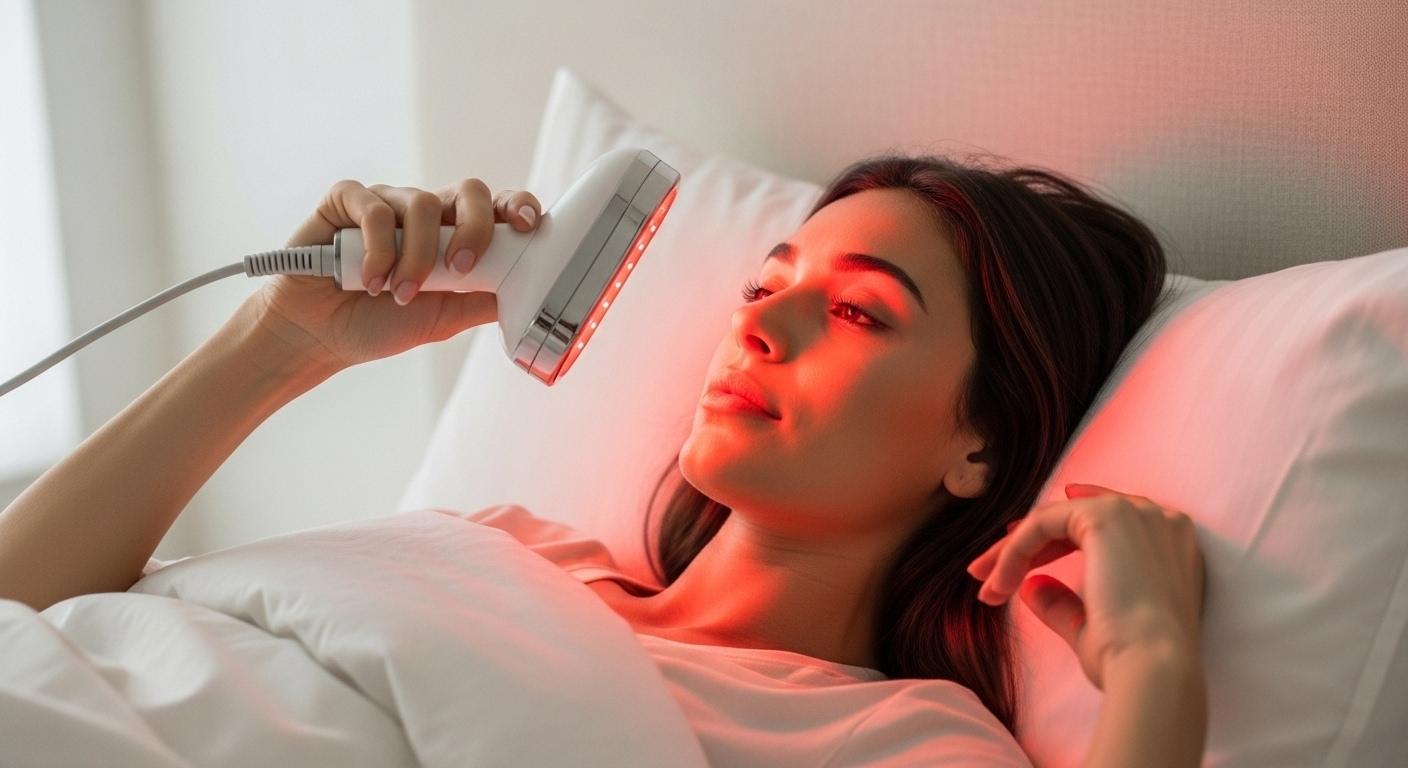
The science behind circadian rhythm, melatonin, and hormonal balance.
For many women, cycle irregularities feel frustrating and unpredictable. What most people don’t realize is that your menstrual cycle is deeply tied to your circadian rhythm — your body’s internal clock. When your sleep–wake cycle becomes disrupted (late-night screens, inconsistent sleep, bright LED lighting), your reproductive hormones can fall out of sync too.
Here’s the exciting part: red light therapy before bed may help restore rhythm to both.
And the science behind this is stronger than most people realize.
Your brain’s master clock — the suprachiasmatic nucleus (SCN) — controls when hormones rise and fall throughout the day. This includes:
Blue light from phones and LED screens suppresses melatonin, which delays your internal clock and can disrupt GnRH pulsatility — the rhythm your brain uses to control ovulation.
A 2019 study in Frontiers in Endocrinology found that melatonin plays a regulatory role in GnRH timing, meaning circadian disruption could lead to delayed or inconsistent ovulation.
Unlike blue or white light, red and near-infrared wavelengths do NOT suppress melatonin.
Multiple studies (including those published in Journal of Photochemistry and Photobiology) show that red light:
This is why using red light before bed makes people feel sleepy, grounded, and calm — it signals “nighttime” to your brain without interfering with hormone regulation.
Consistent evening red light exposure helps create a predictable daily pattern:
A well-regulated circadian rhythm → better hormonal predictability.
Research in Chronobiology International and related chronobiology studies shows that women with stronger circadian rhythms have:
When melatonin and your circadian clock fall into rhythm, several hormonal processes improve:
Before artificial light, women’s cycles tended to cluster around new moon menstruation and full moon ovulation. Modern studies suggest this was likely due to melatonin and nighttime light patterns.
By reducing nighttime blue light and supporting melatonin with red light therapy, many women could notice:
This isn’t mystical — it’s biological.
Red light before bed is a simple yet powerful tool to support:
At HorminaCare, we believe in supporting women with both evidence-based medicine and practical, lifestyle-aligned tools that work with your body — not against it.
If you want a deeper cycle analysis or personalized plan, our practitioners can help you understand exactly what your body needs.

.avif)
.avif)
.avif)
.jpg)

.avif)
.avif)